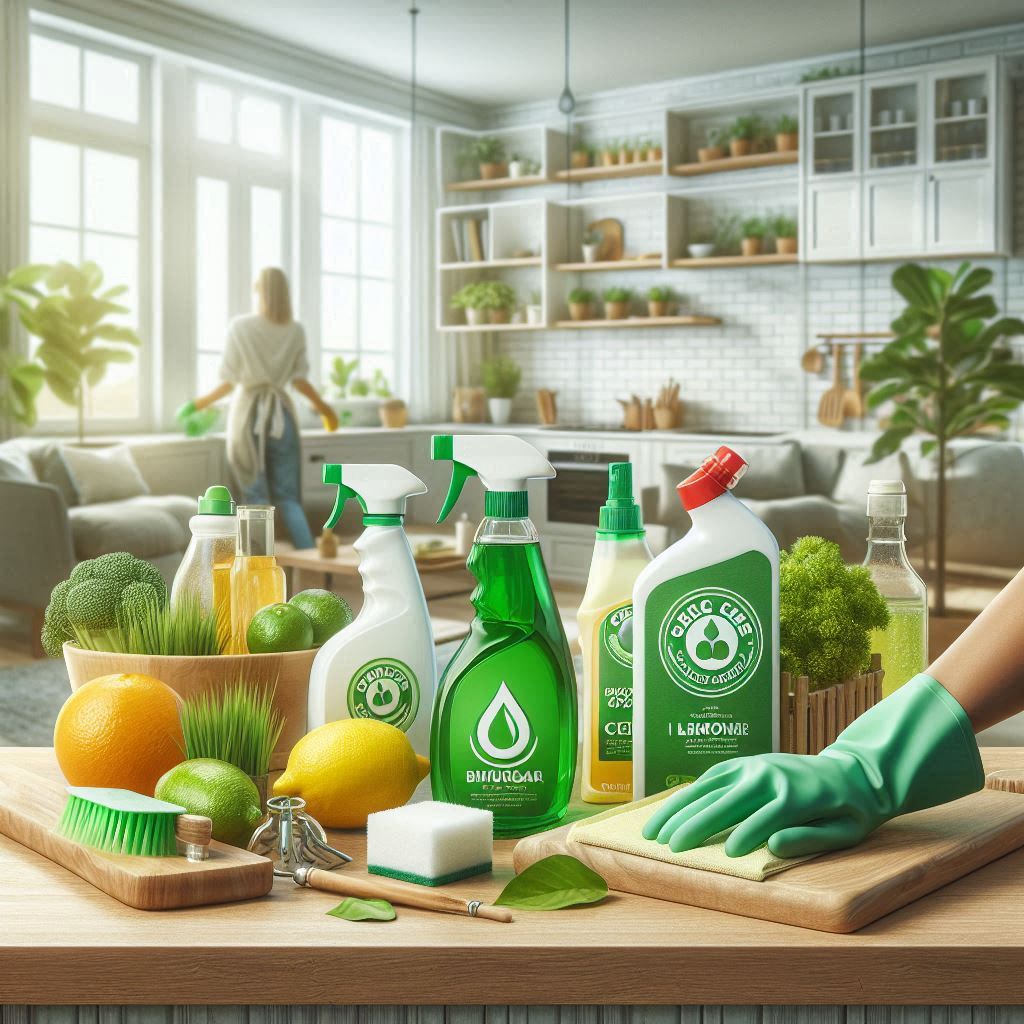
I've been working in eco-friendly cleaning for several years, and I've spent a lot of time evaluating products, researching ingredients, and trying to separate what actually reduces environmental impact from what's primarily a marketing position. The cleaning products industry is full of greenwashing — claims that sound meaningful but aren't backed by anything substantive.
This article is my attempt to give you a practical, honest framework for thinking about eco-friendly cleaning in your own home.
What "eco-friendly" actually means
The term has no legal definition in Canada for household cleaning products. Any manufacturer can label a product as "eco," "green," "natural," or "sustainable" without meeting a specific standard. This doesn't mean all such products are misleading — many are genuinely formulated with lower environmental impact in mind — but it does mean the label alone tells you little.
The areas where cleaning genuinely affects environmental impact are:
- Aquatic toxicity: Chemicals that enter waterways and harm aquatic organisms.
- Indoor air quality: Volatile organic compounds (VOCs) that off-gas during and after cleaning.
- Packaging waste: Single-use plastic bottles that end up in landfill or recycling systems that aren't particularly efficient.
- Resource consumption: How much water and product is used for a given cleaning task.
- Ingredient sourcing and biodegradability: Whether the chemical ingredients break down harmlessly in the environment.
A cleaning product that's genuinely better for the environment does well across several of these dimensions — not just one.
Ingredients to be cautious about
You don't need a chemistry degree to navigate cleaning product ingredients, but knowing a few categories helps:
Synthetic fragrances
The word "fragrance" on an ingredient list can represent dozens of undisclosed chemicals, including potential allergens and VOCs. This is one of the more significant indoor air quality concerns in conventional cleaning products. Products that list their fragrance components specifically, or use essential oils, are more transparent. "Fragrance-free" and "unscented" are different things — "unscented" may use a masking fragrance.
Phosphates
Phosphates have largely been phased out of Canadian household cleaners following regulatory pressure, but they still appear in some products. They cause algal blooms in waterways, which deplete oxygen and kill aquatic life. Verify your dishwasher detergent doesn't contain them.
Triclosan
An antibacterial agent that has been restricted in some personal care products but still appears in certain household cleaners. Studies have raised concerns about aquatic toxicity and its role in contributing to antibiotic resistance. For general household cleaning, there's no evidence that antibacterial products perform better than regular soap and water, so it's easy to avoid.
Chlorine bleach (sodium hypochlorite)
Bleach is effective at disinfection but comes with trade-offs: it's harmful to aquatic environments, degrades to form potentially toxic byproducts in some conditions, and the manufacturing process itself has significant environmental costs. It's appropriate for genuine disinfection needs (e.g., illness in the home, mold treatment) but is overused in general cleaning where it's not necessary.
What actually works as a low-impact alternative
White vinegar
Effective at cutting through hard water deposits, soap scum, and general grime on non-porous surfaces. Biodegradable, cheap, and comes in large containers that reduce packaging. Key limitation: it's acidic and will damage natural stone (marble, granite), certain metals, and some specialty finishes. Don't use it as a universal surface cleaner — check your surfaces first.
Baking soda
Mild abrasive and deodorizer. Works well on sink stains, oven interiors, and as a drain freshener. Not a disinfectant. Useful for gentle scrubbing where you want to avoid scratching surfaces.
Castile soap
Plant-based soap that's biodegradable and effective as a general cleaner. Diluted in water, it handles most household surfaces well. Concentrated, so a single bottle lasts a long time — lower packaging waste per use than most conventional all-purpose sprays.
Hydrogen peroxide (3% solution)
A less environmentally damaging disinfectant alternative to bleach for many applications. Breaks down into water and oxygen. Useful for bathroom disinfection, mold spot treatment, and surface sanitizing. Note: store in a dark container — it degrades in light.
The packaging problem
The biggest environmental impact of most cleaning products isn't the chemicals — it's the packaging. A single household typically uses dozens of plastic spray bottles per year, many of which end up in landfill even if placed in recycling (plastic recycling rates in Canada are lower than most people assume).
The most effective changes you can make in this area:
- Concentrated refills: Several brands now sell concentrated cleaning tablets or small pouches that you mix with water in a reusable bottle. The packaging volume reduction is significant — often 90% or more compared to ready-to-use sprays.
- Bulk purchasing: For products you use regularly (dish soap, laundry detergent), buying in larger containers reduces per-use packaging waste.
- Reusable cloths: Switching from paper towels to washable microfibre cloths or cloth rags is one of the highest-impact changes a household can make. Microfibre is particularly effective at cleaning with less product — the fiber structure traps particles mechanically.
Certifications worth trusting
When you want more than a marketing claim, third-party certifications provide some verification. In Canada, these are the most credible for household cleaners:
- EcoLogo (UL Environment): A Canadian certification with a credible history. Products must meet specific criteria for environmental impact across the product's lifecycle.
- EPA Safer Choice (US): A US EPA program that evaluates chemical ingredients for environmental and health safety. Many products sold in Canada carry this certification.
- B Corp: A certification for companies as a whole (not specific products), but indicates a verified commitment to environmental and social standards in operations.
Be cautious with vague certifications or self-awarded badges. "Certified green" without a named certifying body means nothing specific.
The honest trade-offs
Eco-friendly cleaning sometimes involves genuine trade-offs. Natural alternatives to bleach don't always match its disinfecting effectiveness in high-pathogen situations (illness in the home, for example). Some concentrated products require more mixing and preparation. Products without synthetic fragrances may smell different or less pleasant to some people.
These trade-offs are real and it's worth being clear-eyed about them. For most everyday cleaning in a healthy home, the trade-offs are minor. For specific situations — serious mold, illness disinfection, food safety concerns — it's appropriate to use more targeted products and not feel guilty about it.
Our approach at Cleaning House
Our eco-friendly cleaning service uses a vetted product list reviewed by our team. We avoid synthetic fragrances, phosphates, and unnecessary antibacterials. We use concentrated formats and reusable cloths to reduce packaging waste. We don't claim to be perfect, and we don't apply an eco label to our standard service where we use conventional products.
If you're interested in our eco-friendly cleaning option or want to ask about specific products we use, you can reach us through the contact page.